

Chapter Three, Part Two
The Shine-Boys

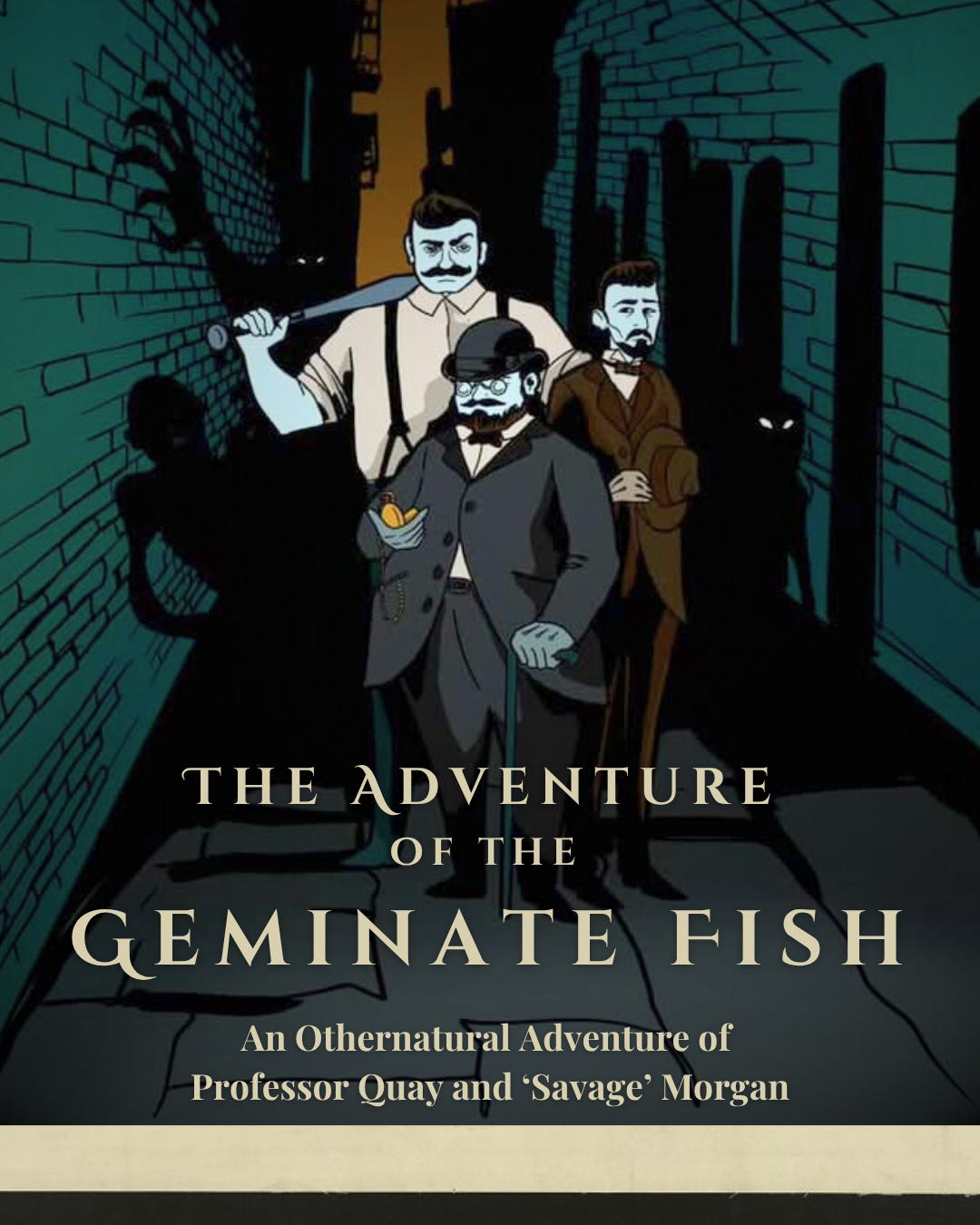
The Shine Boys
The sun was rising when I hired a carriage to return me to my Aunt Regenia’s palatial Fifth Avenue residence, where I was determined to sleep until noon at the earliest. I asked the driver to take me through Central Park, where Mr. Olmsted’s greatest creation was beginning to show the promise of a masterpiece. Most of the trees in the park were newly planted and had no leaves to shed this season, but the few small flashes of verdant green visible amid the sparkling roadways added a dazzle of promise to the morning, and I was once more in good spirits by our arrival on the avenue.
Even at sunrise, the famed Fifth Avenue was bustling with activity, the wide sidewalks already beginning to fill with pedestrians and fellows about their business, from lads delivering newspapers to milkmen and icemen lining up at kitchen entrances in the alleyways. My aunt’s residence was no exception, and a dozen of her workers were busily brushing the four-story edifice with long-handled brooms and from scaffolding, stripping the imported marble and stone of the yellow grime and soot endemic to Manhattan. Their efforts were already giving good results, and the white façade of the topmost floors shone in the crisp autumn sunlight, while billows of dust dislodged by the brushes swirled along Fifth Avenue, causing more than one passing gentleman—be he making an early beginning to his day or a late end of his evening—to abandon the wide sidewalk and take his chances in the manure-strewn street.

I myself had no choice but to charge straight into the swirling cloud, to the amusement of several deliverymen who waited to use the servants’ entrance off to the side of the building. Of course, that door was out of the question for me, so, taking a page from the professor’s book, I hid my nose and mouth behind a cloth and made for the front door, nodding at the poor policeman who stood, duty-bound, at the edge of the growing cloud. The officer was ostentatiously “patrolling” Fifth Avenue but was really part of the round-the-clock protection provided to us through my aunt’s contacts with the New York City Police Department.
Meanwhile, two of my aunt’s own employees waited near the top of the stairs. They were dressed as footmen, but it was evident by their size and carriage that these men earned their pay with their fists rather than their manners. All three of my aunt’s guards (for the police officer counted as such) were there not only to protect the front door but to keep each other honest as well. Should any one of the three become slack in his duty, the others would doubtless inform their respective superiors and judgments would be handed down. It was only another example of how my aunt worked, spinning small, clever webs of conspiracy and intrigue that always benefited her in the end.
All three guards nodded to me as I passed, and one of the fellows near the top of the steps held the door open for me. I could tell by his features and manner that he was one of my aunt’s hires from the Lower East Side, and he watched to see if I would touch the mezuzah as I passed through the doorway. I did not, and his small grunt of disapproval was loud enough to reach me. I was unaffected, as I did not set out to win the good opinion of men who, although somewhat devout, still found enough leeway in their belief to take employment in criminal enterprises. Like me, the man had long since lost his sidelocks, either in an effort to appear more modern or to conceal his Semitic heritage.
My aunt never failed to touch the scripture whenever entering or leaving the house, although she never went to temple and certainly did not cease work on her empire every Friday night at sunset. Yet where my aunt’s Jewish employees found all of this forgivable in her—and indeed in themselves as well—few failed to hold my religious lapses against me. I often wondered if it was part of the hiring process to explain to all of her Jewish workers that among my many failures, it was choosing medical school over the path of a rabbi that had most disappointed her.
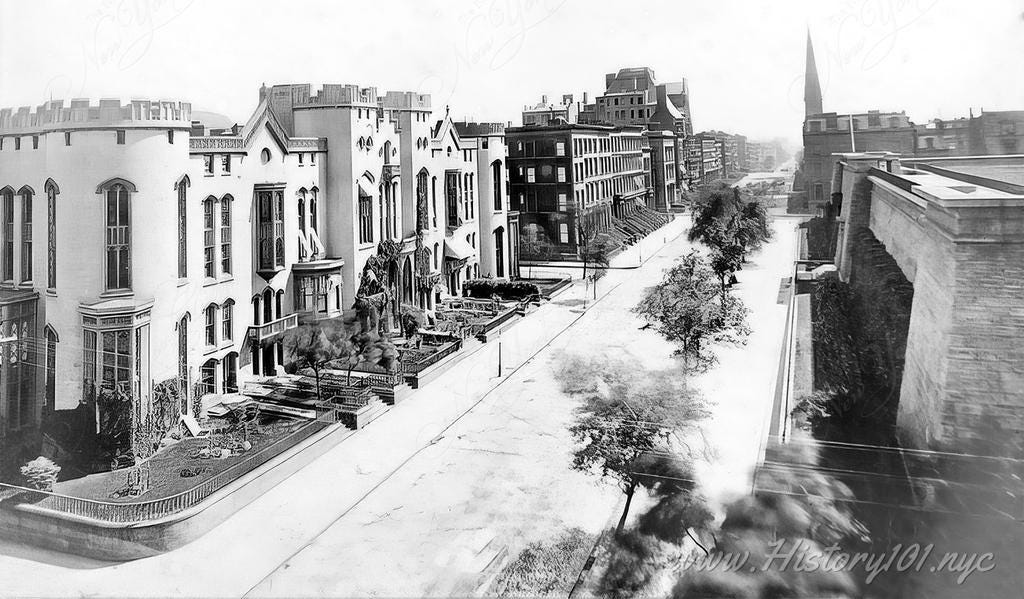
My aunt’s mansion was one of the finest on Manhattan Island (she had boasted none other than Senator William Tweed as a neighbor, at least until his downfall in ’71), and of such prodigious size that it should have been possible for us to live together and see almost nothing of one another except for holidays or other special occasions. But that was not how my aunt wished it, and whenever I left home or returned, I faced a gauntlet of servants, spies, and my own lurking aunt herself, each armed with numerous questions about my destination, intentions, and recent activities. With all of this in mind, I climbed the stairs in the large foyer, my feet making no noise upon the rich carpet, and made for my sanctuary.
My stealthy crawl was soon cut short by a loud shout of “Doctor!” that froze me in my tracks. Reluctantly, I turned to face the most senior of my aunt’s many household employees, her butler and driver, Shlomo.
A short but solid man—one could almost say compact—Shlomo had served as a sapper in the War: a messy, some would say dishonorable duty that combined tunneling, demolition, and sabotage. Few men had a taste or talent for such work, and fewer still survived their operations, but Shlomo had come through intact and had since mastered the fine art of running a household while still maintaining his killer instincts and thoroughly intimidating manner. Indeed, I had once playfully referred to him as my aunt’s valet, and I never saw the hand that cuffed me, so quickly did the man move.
I waited as Shlomo made his way down the long west hallway toward me. “Another late evening, Doctor?” he asked as he slipped on a pair of white wool gloves. His manner may have been excruciatingly polite, but he drew the line at calling me sir—or perhaps my aunt had drawn that line for him. Regardless, Doctor was the only title he had ever given me.
“Are you making conversation, Shlomo,” I asked, “or has my Aunt Regina sent you to give me a shaking-down? I’ll report our disappointing results after I’ve had some rest.”
He paused at my unusually confrontational tone. Then his square head tilted a slight degree on his almost nonexistent neck as he looked past me at a portrait that hung upon the wall. “A ‘report,’ as you put it, won’t be required,” he said as he stepped past me to run a white wool fingertip along the frame. “We had Commander Drakeson in here already. He related the details of your… expedition. The commander said that you and your companions were causing trouble near Forty-Second Street.”
It should come as no surprise that, like my aunt, Shlomo frowned upon my friendship with Professor Quay and rejected Morgan most of all, having “less need for a Navy man than a bull has for teats,” as he put it.
“We were defending ourselves!” I protested. “Surely when fellows attempt to dupe us and then attack us, it is within our rights to protect ourselves.”
Shlomo found the frame to be clean. He crossed the hallway and ran his white finger along the underside of the railing where the west hall overlooked the gallery. “You should have defended harder,” he said, coming up with dust this time. His already dark expression grew darker. “You left too many witnesses to respond to your actions. The men you rousted are protected by the Shiners. They pay their protection, and the gang whose fun you spoiled are back on the street already.”
I did not know who the Shiners were, but I guessed them to be another of the many gangs, political groups, or other organizations that regularly contested for turf on Manhattan Island.
“They’ll all be looking for you now,” Shlomo continued. “You and your ghost-chasing fellows.” I sighed at this description. In all of our inquiries, we had never chased a ghost. Professor Quay had no belief in them.
“Then have some of our policemen put them back in jail,” I said. It was a terrifically stupid remark, and I suppose I knew that even as I spoke.
“‘Our’ policemen?” Shlomo asked. “They are ‘our’ policemen now? Have you come into the family business, then? Do you include some of that allowance my lady turns over to you in our regular contributions to the police?”
“You know that I do not,” I said. “But I am part of the family and therefore part of the business. My aunt is my only patient, after all.” Not that she needed much care. Although something of a hypochondriac, my aunt’s irrational belief that something was physically wrong with her and the ironclad suspicion that someone was due to gun her down were her only maladies. “That has always afforded me protection enough,” I concluded.
“This is different,” Shlomo said. “You’ve stepped in it this time, Doctor. The Shiners are young and hungry. They figure we’ve come after them and have less to lose by hitting back than by lying down and taking it. You have no idea how ugly this could get.”
“They are only four men—” I began.
“Four men who are part of a fifty-man gang!” Shlomo thundered, his outburst echoing in the otherwise silent household and doubtless sending even the most distant servants scurrying for cover. He wrestled with calm, and as with all contests of will this man undertook, prevailed. “Allow me to educate you, Doctor,” he said, his tone again level. “Ten years ago, the Shiners were the Black-Eye Boys, then the Shine-Boys; now they’re called just the Shiners. They came up out of the Lower East Side and moved to midtown after the War. They run a goodly hell house on D and do some pimping on the corners around the bridge. They’re small fry, and if they were trying to take a piece of our action, we’d have no trouble taking them down. But you started this fight, and in the end, the fight will be over you, and no one aside from your aunt quite knows your value. Even I have my doubts of your worth. That will lead to confusion on both sides as to how hard a fellow can push.”
I had nothing to say to this, so Shlomo continued.
“You don’t want my lady to know what you’ve put your foot in, and to keep the peace around here, I’ll do my best not to let her know. But that means we’re fighting this one with half-measures. So if the Shiners get one of ours because I’m wearing kid gloves, my lady may think it unprovoked and demand both barrels. Worse, if they do manage to get you, she’ll want every one of them dead to the third generation—wives, children, parents, friends. That is how they did things in the old country, and you know how she treasures tradition. This could be one of the biggest slaughters the city has ever seen, and it would all be because you can’t find a better way to spend your evenings than rousting fabulists.”
“I went at her request!” I argued.
“The damn Astors were there two weeks ago. Did any of them toss two men through three walls?”
I had run out of patience. “What are you trying to say?” I demanded. “That I’m alone in this?”
“My lady wants you alive, so I’ll put some guns out on the street to keep you that way, but my responsibility doesn’t extend to those blowhard buffoons you put so much stock in.”
I knew that Shlomo was trying to help me, in his own rough way, but I scoffed in what I hoped was a convincing manner. “They don’t need protection,” I said. “We took these Shine-boys on once; we can do so again, with or without your ‘guns.’”
Shlomo showed no emotion at my retort, saving his fury, perhaps, for the maid who had forgotten to dust the far side of the hall banister. “I’ve told you all I have to tell,” he said. “You know there are men looking to do you and your fellows harm. Living through that is up to them. She would enjoy your company at lunch on Thursday—Delmonico’s, one o’clock. Don’t be late.” He gave a small bow—more out of habit, I knew, than respect—and turned without being dismissed. With his back to me, I could see that even when attending to duties around the best-protected home in Manhattan, he wore a large-bore sidearm beneath his butler’s coat.
Feeling a mix of rage and consternation, both emotions muted by a growing exhaustion, I made for my rooms, hoping that my own attendant, Toby, had the place in good order for me.
Part Seven Posts Wednesday January 7th